Japanese prints
The Farnesi family's collection of Japanese prints counts over a hundred sheets: kabuki theatre triptychs by Kuniyoshi, Kunisada and Yoshiiku, twenty-three plates by Hokusai from the One Hundred Views of Fuji, prints by Hiroshige, Utamaro, Eisen, Shunshō and Kōgyō. Here a choice of sixteen.

"Large-head" portraits of two actors on stage, with the cartouches of their names: the ōkubi-e genre made famous by Utagawa Kunisada and his school.

Two figures in kimono with a narrative inset and text above, by Kuniyoshi (1797-1861), the great master of warrior and theatre prints, present in the collection with a triptych of 1849-1853.

Boats and bathers beneath a long wooden bridge, in an unusual horizontal format: the landscape of Hiroshige (1797-1858), with his graded sky and Prussian-blue water.

A group of samurai in sumptuous armour, their names in cartouches: the warrior prints (musha-e) that told the epics of medieval Japan.

A view with figures beneath a tree and a balustrade, from the famous-views series (meisho-e) that Hiroshige devoted to Edo and the roads of Japan.

Red and yellow peonies with a small bird: the "birds and flowers" genre (kachō-ga), in which Hiroshige joined botanical precision to the poetry of the season.

A panel from the theatre triptychs in the collection (Kunisada, Kuniyoshi, Yoshiiku): the actor on stage with a paper umbrella, the costumes and the cartouches of the roles.

A theatre scene on a boat, with the actor in a checked kimono: from the kabuki triptychs in the collection, cut in the golden decade of actor prints.

Two characters on a veranda over the water, names in cartouches: the collection holds a triptych by Yoshiiku (1833-1904), a pupil of Kuniyoshi.

The actor with the large hat and straw cape, from the triptychs by Kunisada (1786-1864), "Toyokuni III", the most prolific designer of actor prints of his day.

A dramatic scene with a princess in a pink kimono and warriors beneath a bridge: the theatrical taste and bright colours of the mid-nineteenth-century triptychs.
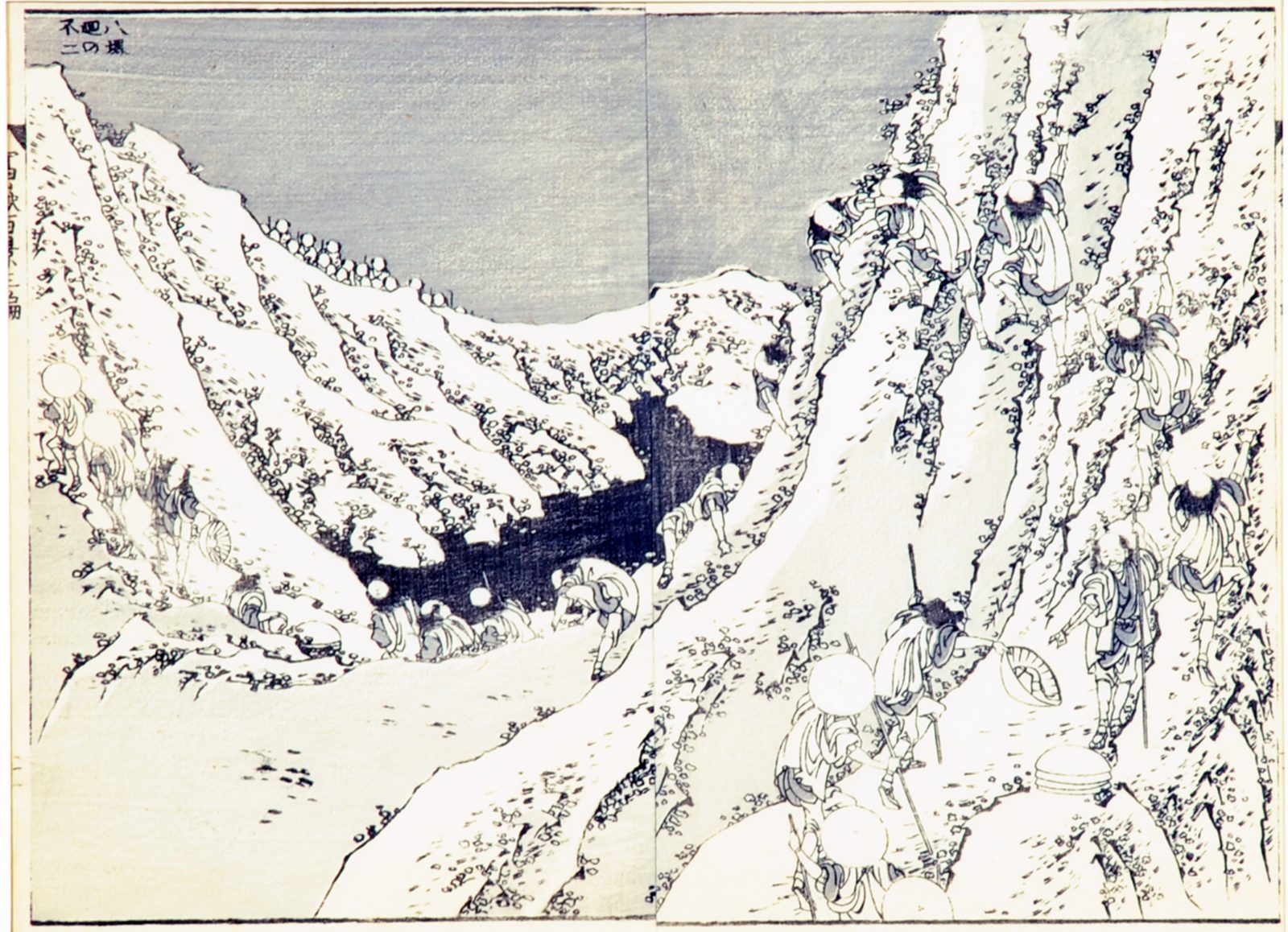
From "One Hundred Views of Mount Fuji" (Fugaku hyakkei), the illustrated book in which Hokusai (1760-1849) declined the sacred mountain a hundred ways. The collection holds twenty-three of its plates.
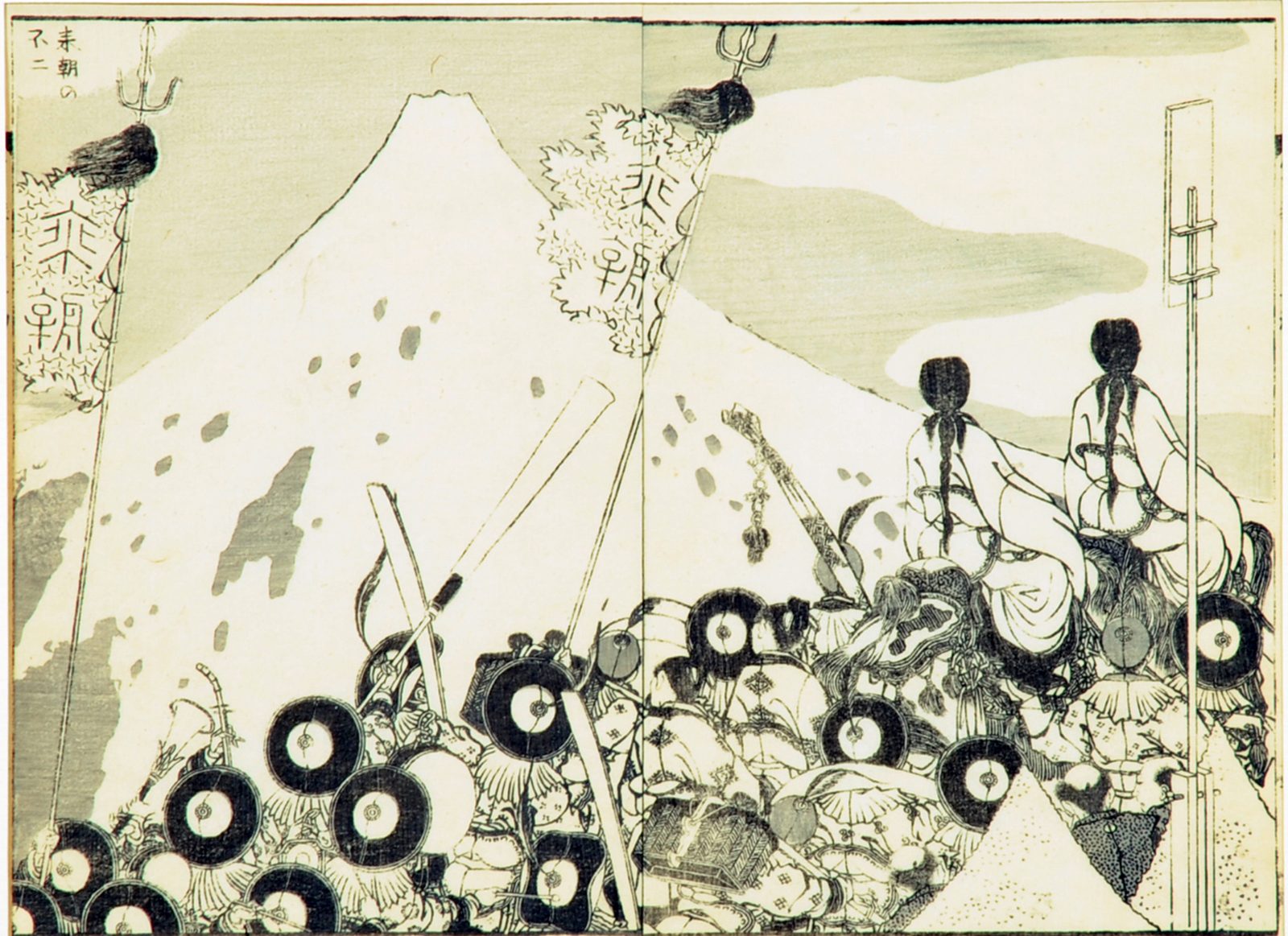
Travellers and coils of rope in the foreground, the cone of Fuji far away: the freedom of composition with which Hokusai made the mountain a pretext for telling everyday Japan.
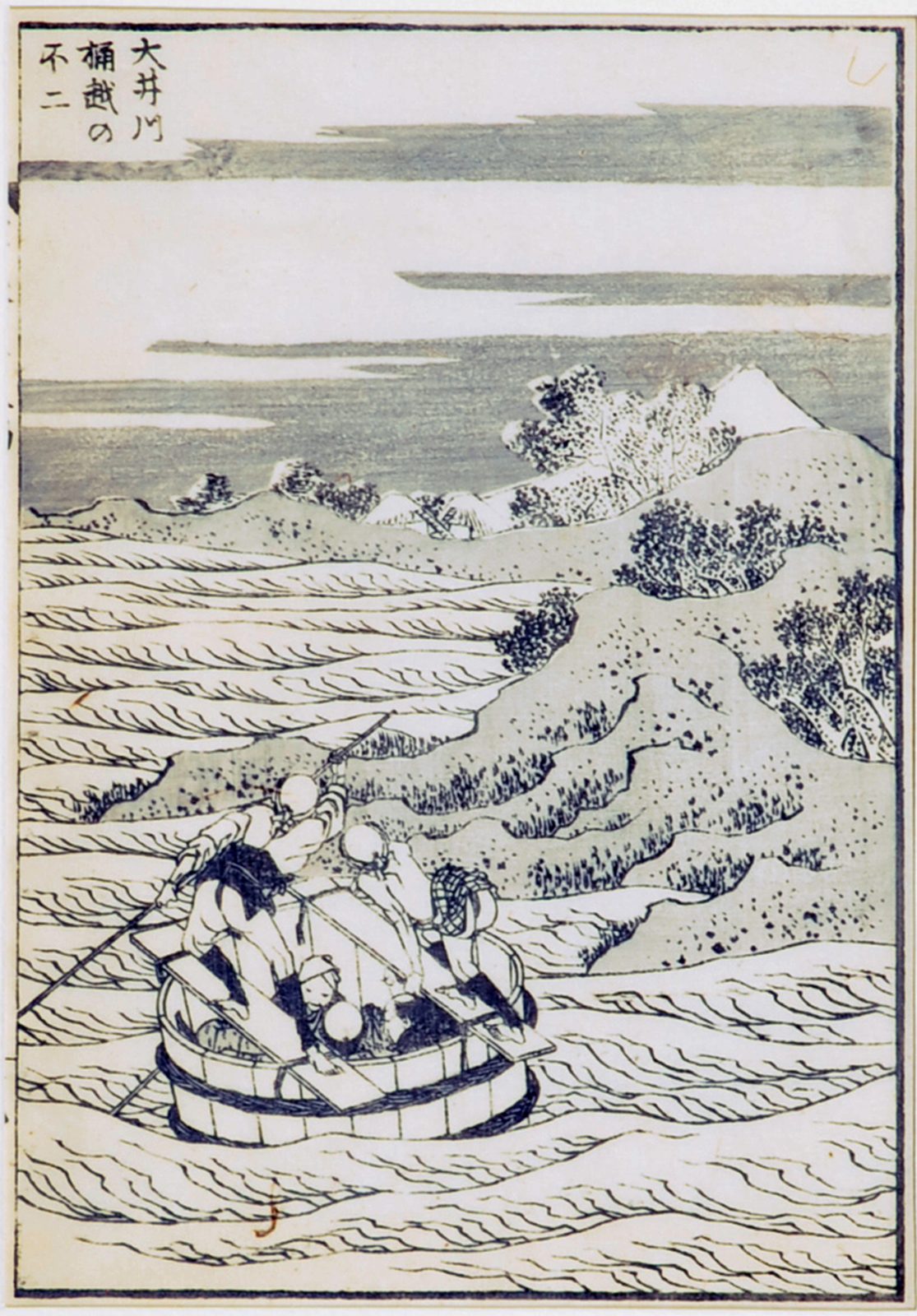
A craftsman at work on a large tub and Fuji peeping over the rim: one of the most celebrated inventions of the book, where the mountain appears where least expected.
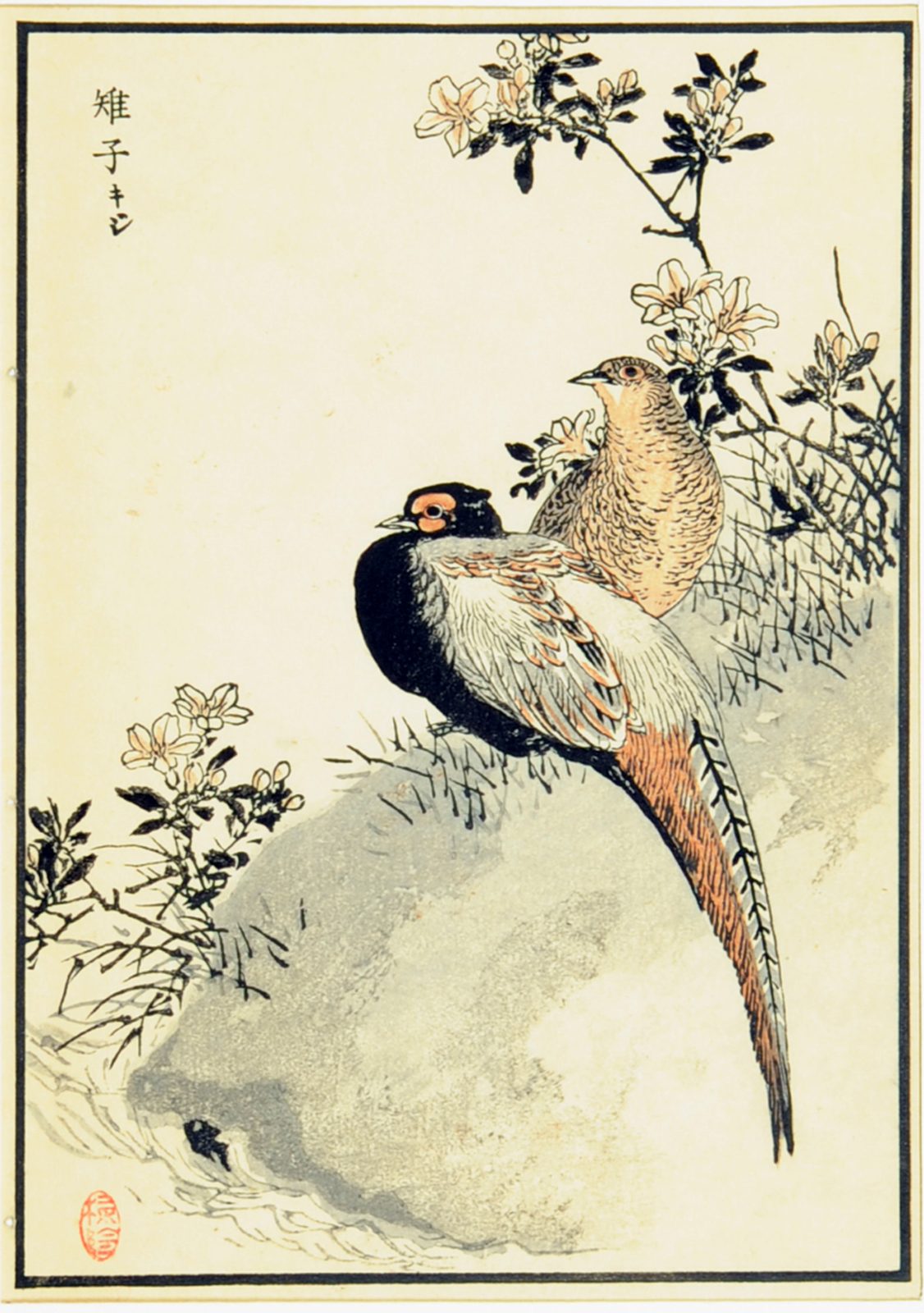
A long-tailed pheasant perched among blossoming branches: the "birds and flowers" genre in its late-nineteenth-century season, with the delicate colours of the naturalistic print albums.
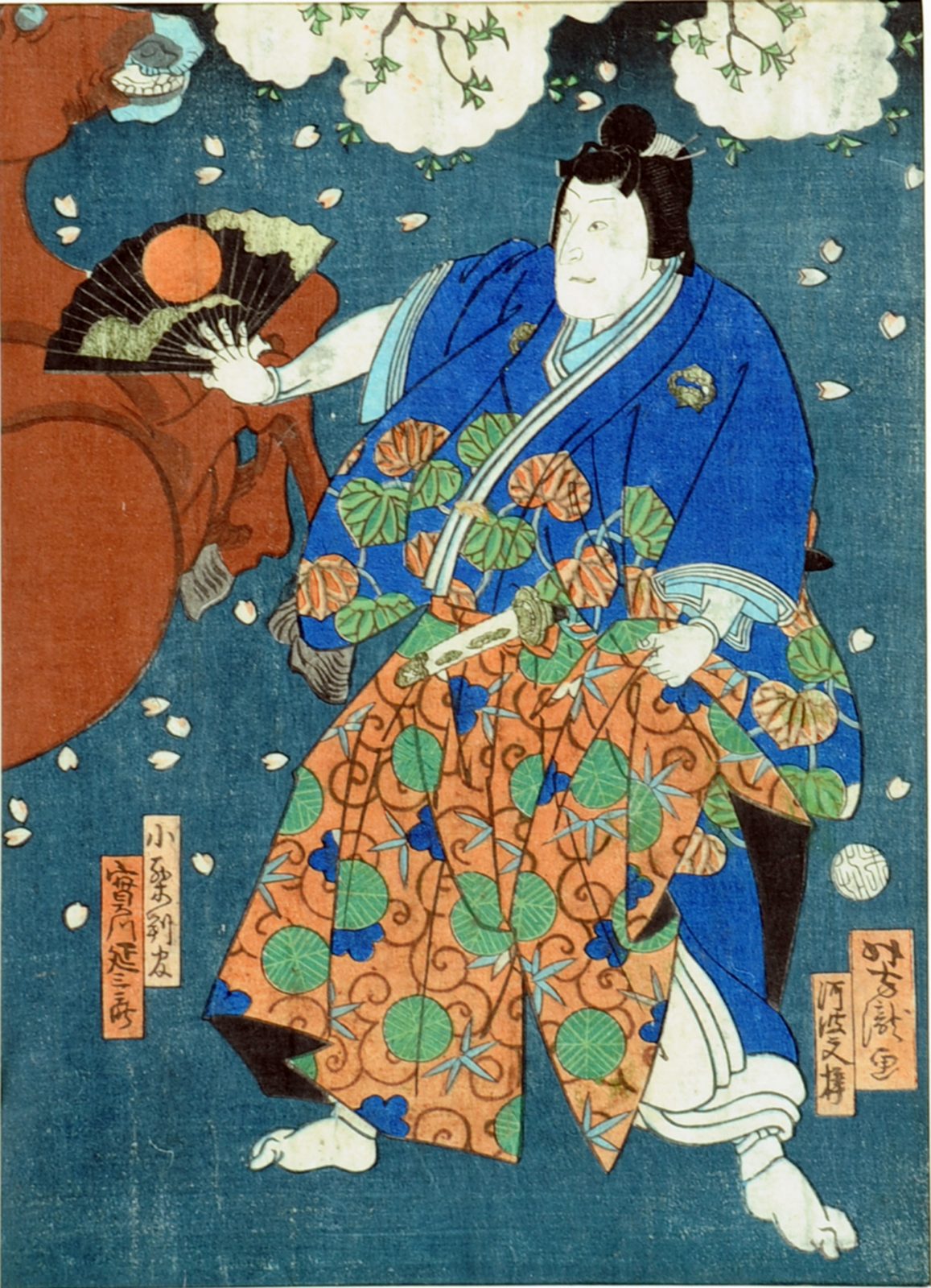
An actor in a blue kimono with geometric motifs and an open fan: the actor print in the vertical ōban format, with the cartouche of the role above.


