Over one hundred volumes from the sixteenth to the nineteenth century, almost all on Pisa and Tuscany: history, saints, thermal baths, botany, anatomy, architecture, engravings of the Camposanto. And a great English Bible of 1680.
Folio · engraved title · plates by Nicolaes Visscher · contemporary morocco binding with brass clasps · 52 × 33 × 18 cm
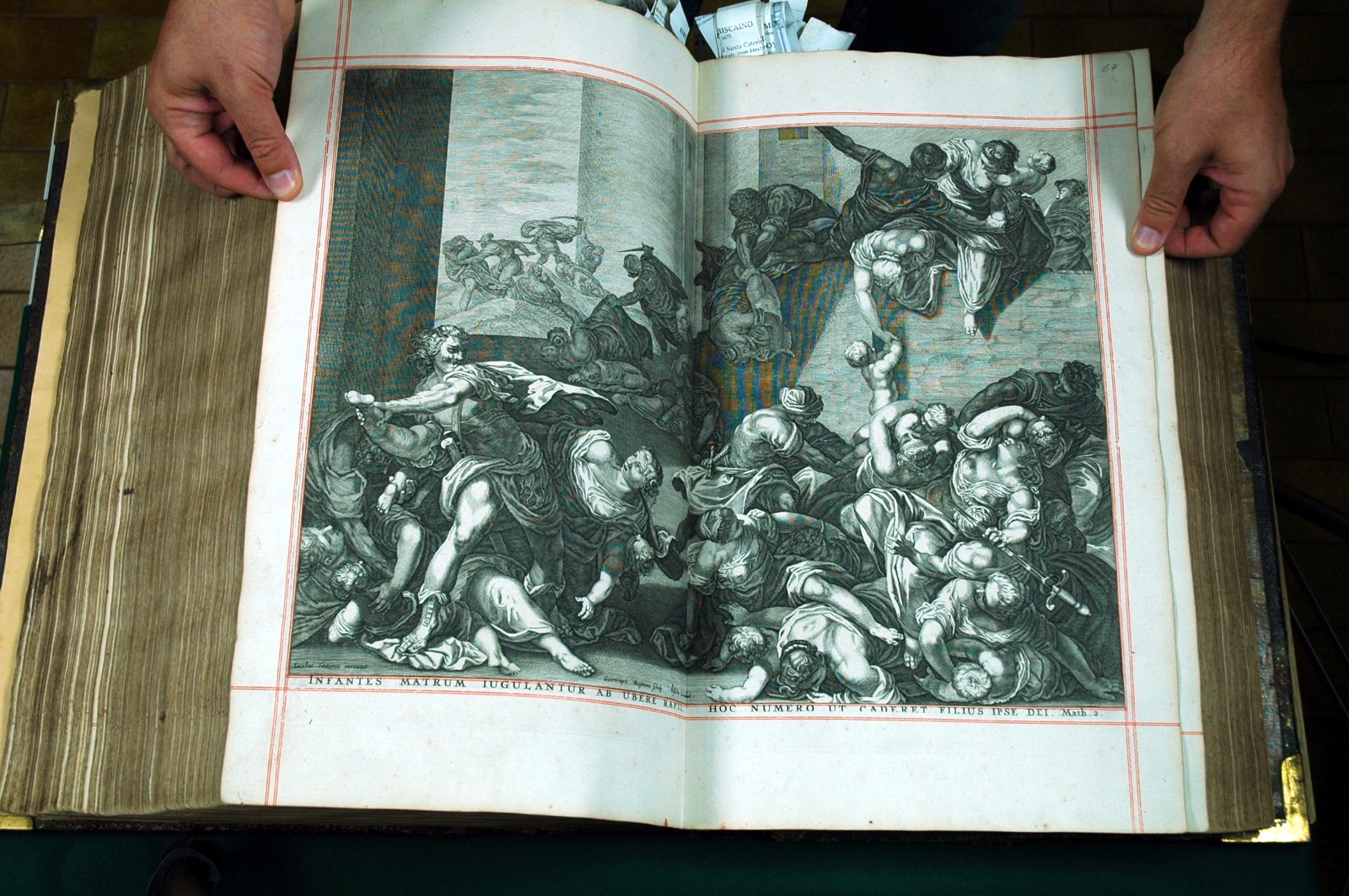
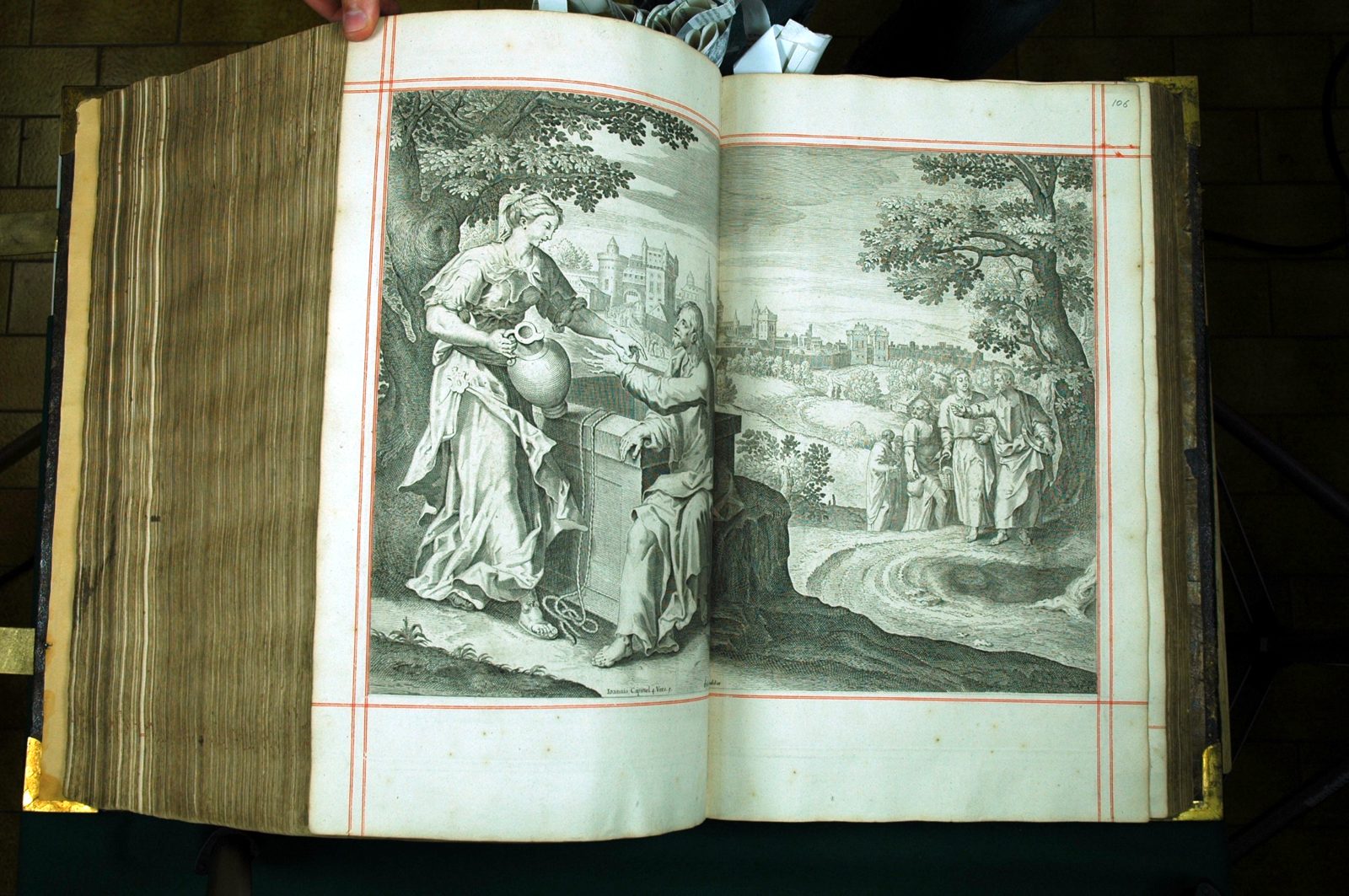
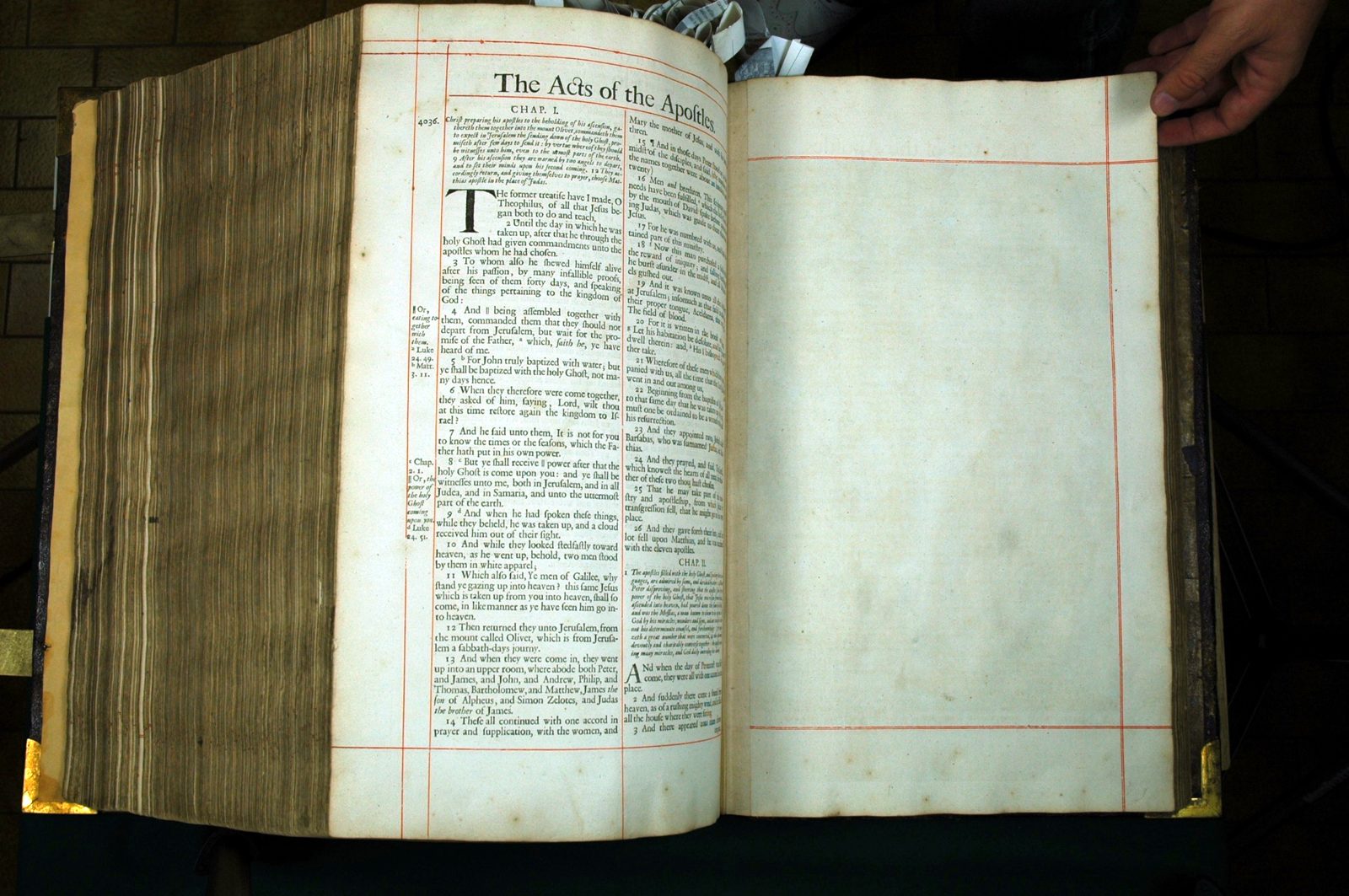
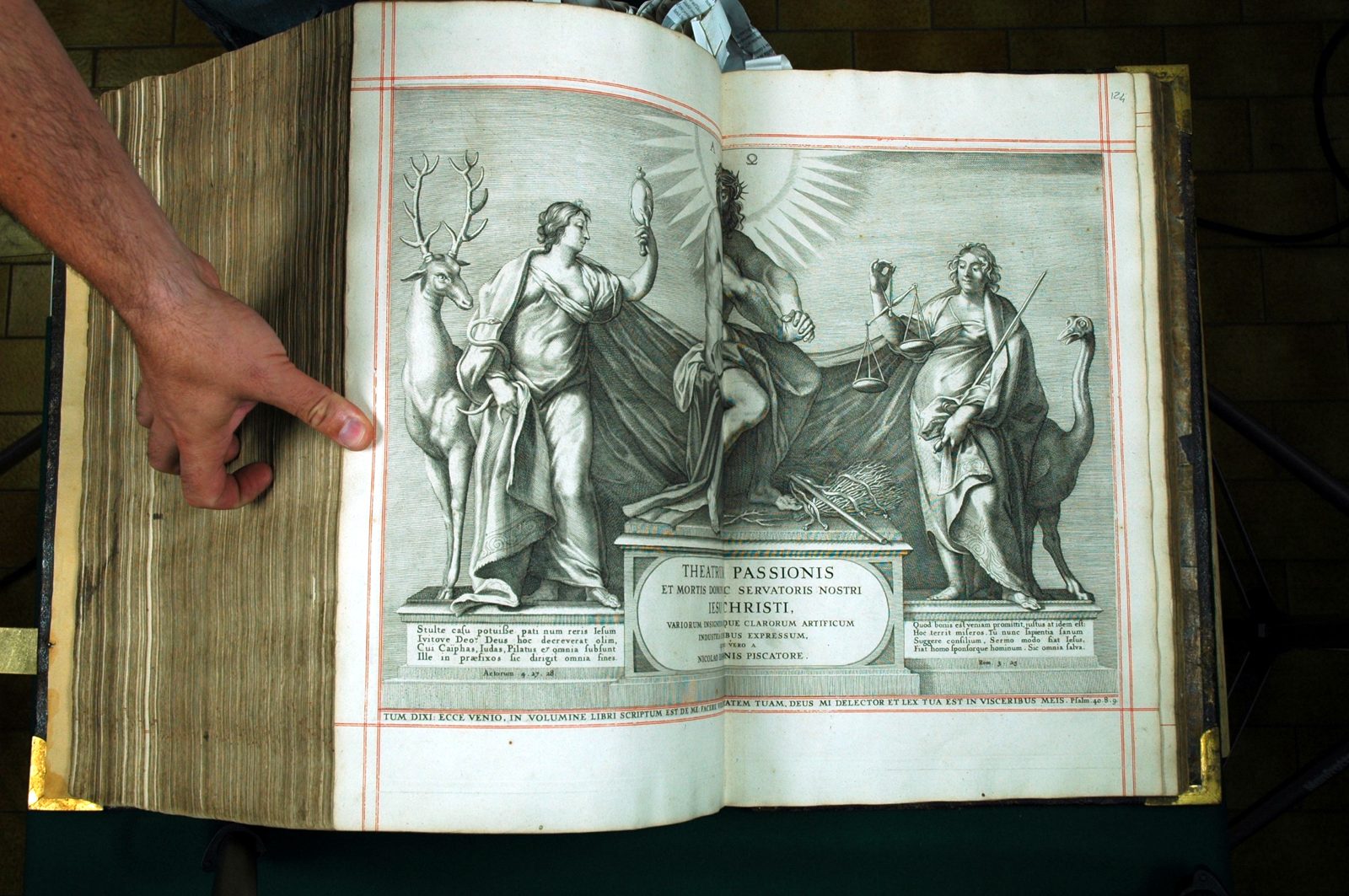
The great English Bible printed at Oxford in 1680, in the folio edition of the Theatre: a ruled copy (every page hand-ruled in red), enriched with the plates engraved in Amsterdam by Nicolaes Visscher — the four Evangelists, the Theatrum Passionis, scenes from the Old and New Testament. Contemporary morocco binding with the original clasps. Fully restored, it is the heart of the library assembled by Flaminio Farnesi.
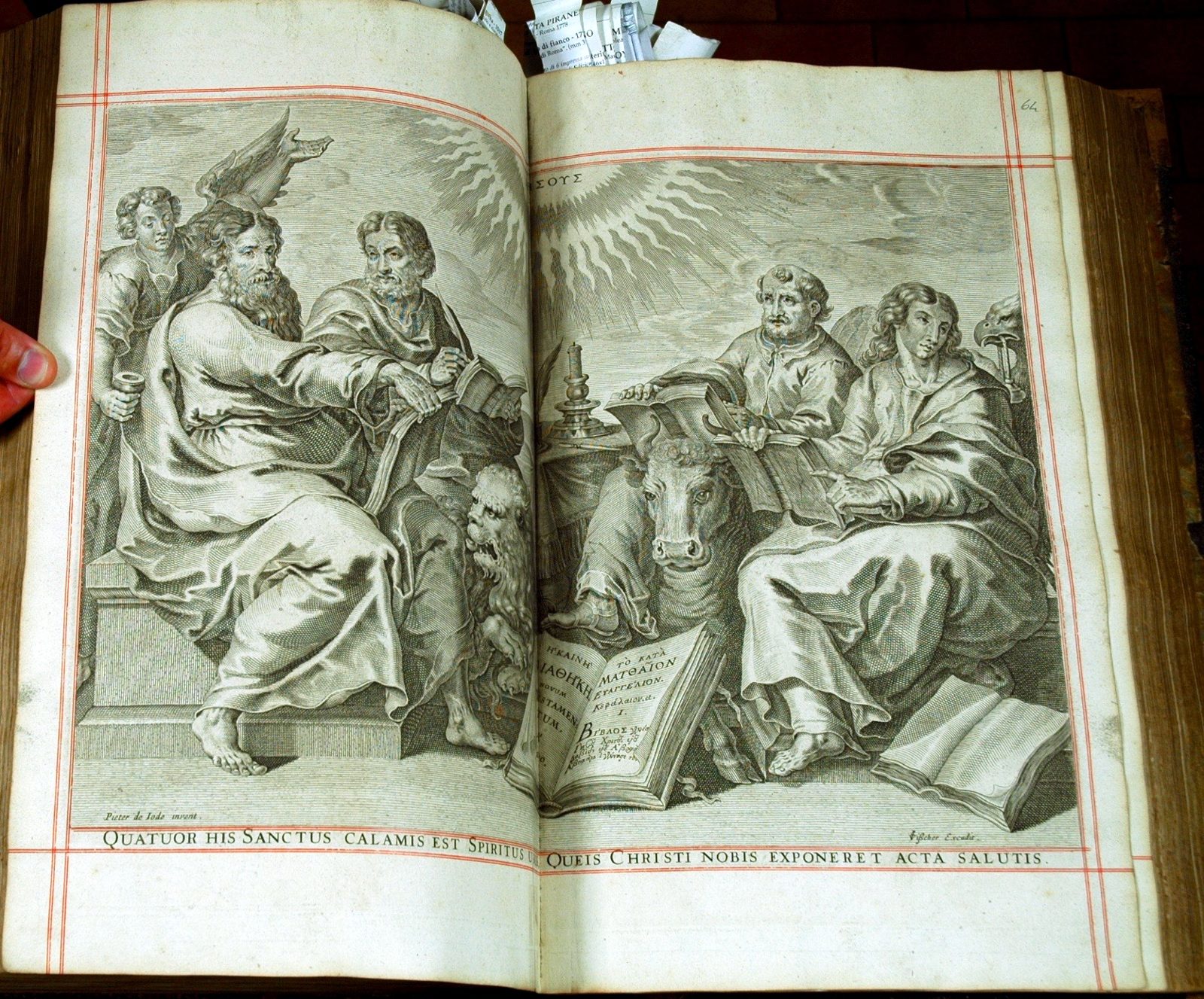
The four Evangelists, plate by Nicolaes Visscher


From the Medici decree of 1548 to the 1856 guide to Pisa: the volumes that best tell the story of the collection, each with its entry. The full inventory counts over one hundred titles and is available to scholars on request.

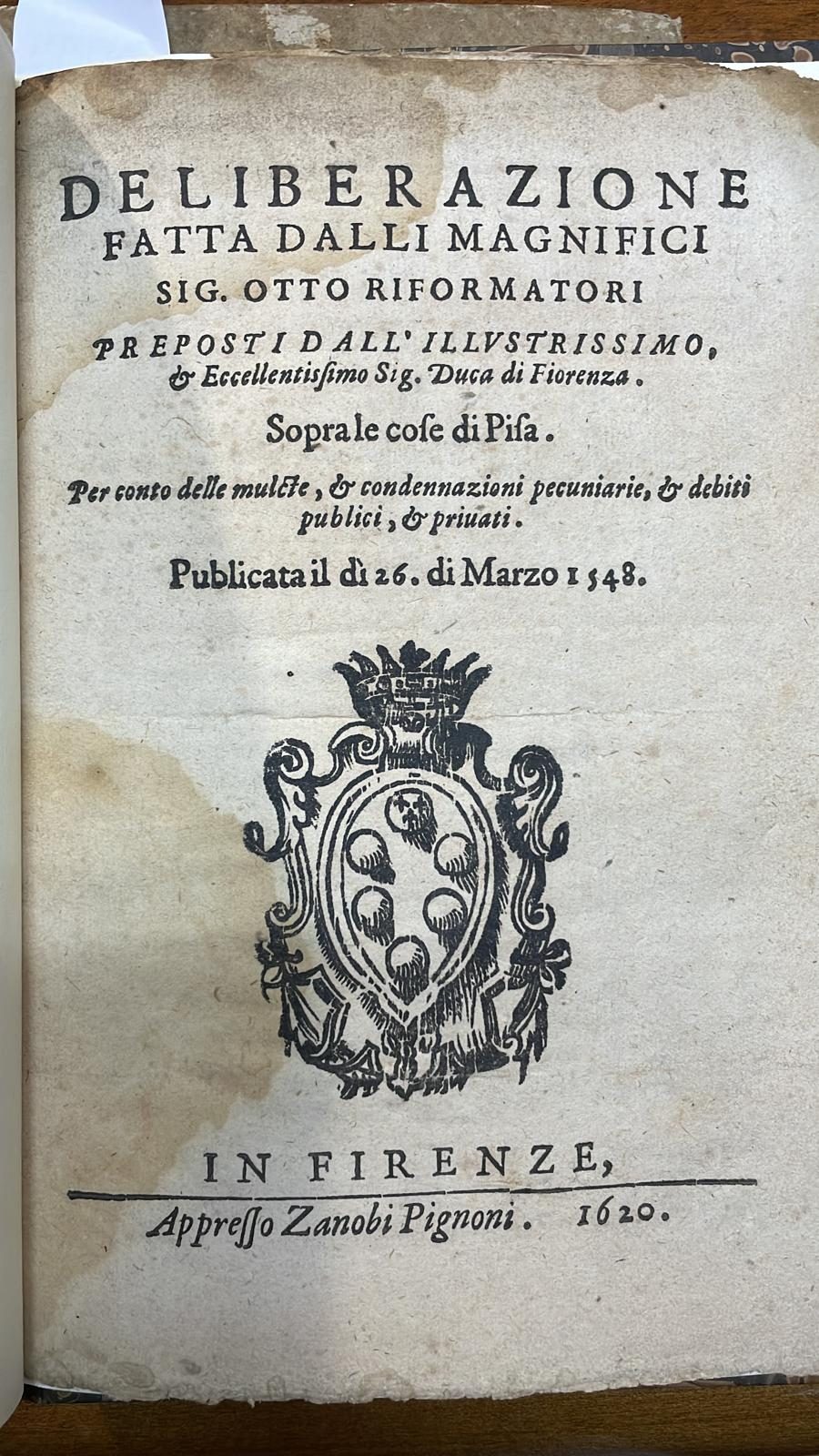
The oldest volume in the collection: the deliberation of the Dukes of Florence "on the affairs of Pisa", with the Medici coat of arms on the title. A government document of the early Grand Duchy.

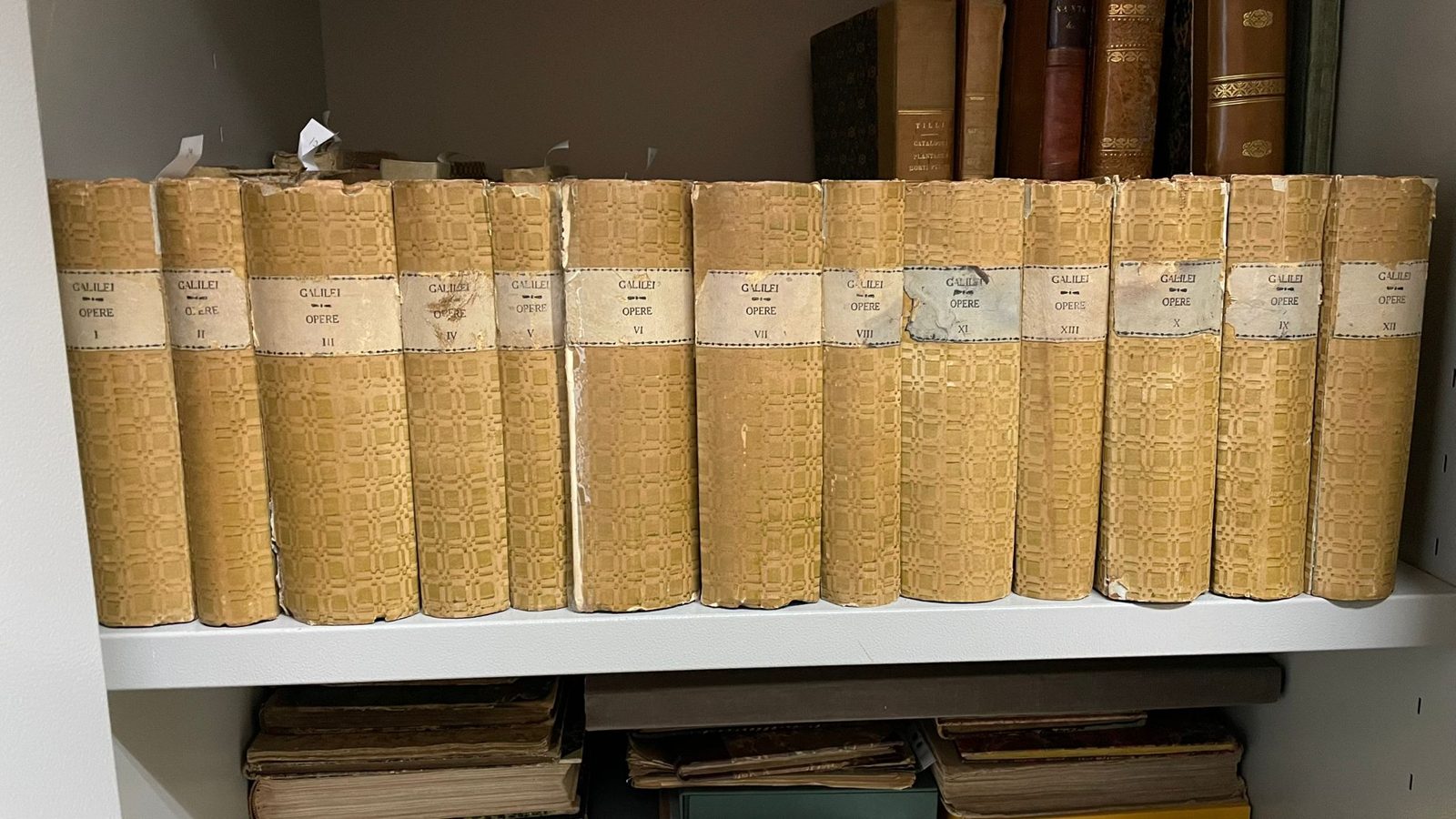
The library holds the Works of Galileo Galilei in twelve volumes; here the letter to the Jesuit Christoph Grienberger "on the mountains of the Moon". Galileo taught in Pisa, and Pisa is the thread running through the whole collection.

The naval exploits of the Order of Saint Stephen, the Pisan chivalric order, told by the Jesuit Fulvio Fontana and dedicated to Grand Duke Cosimo III. Engraved title with the crown and insignia of the Order.

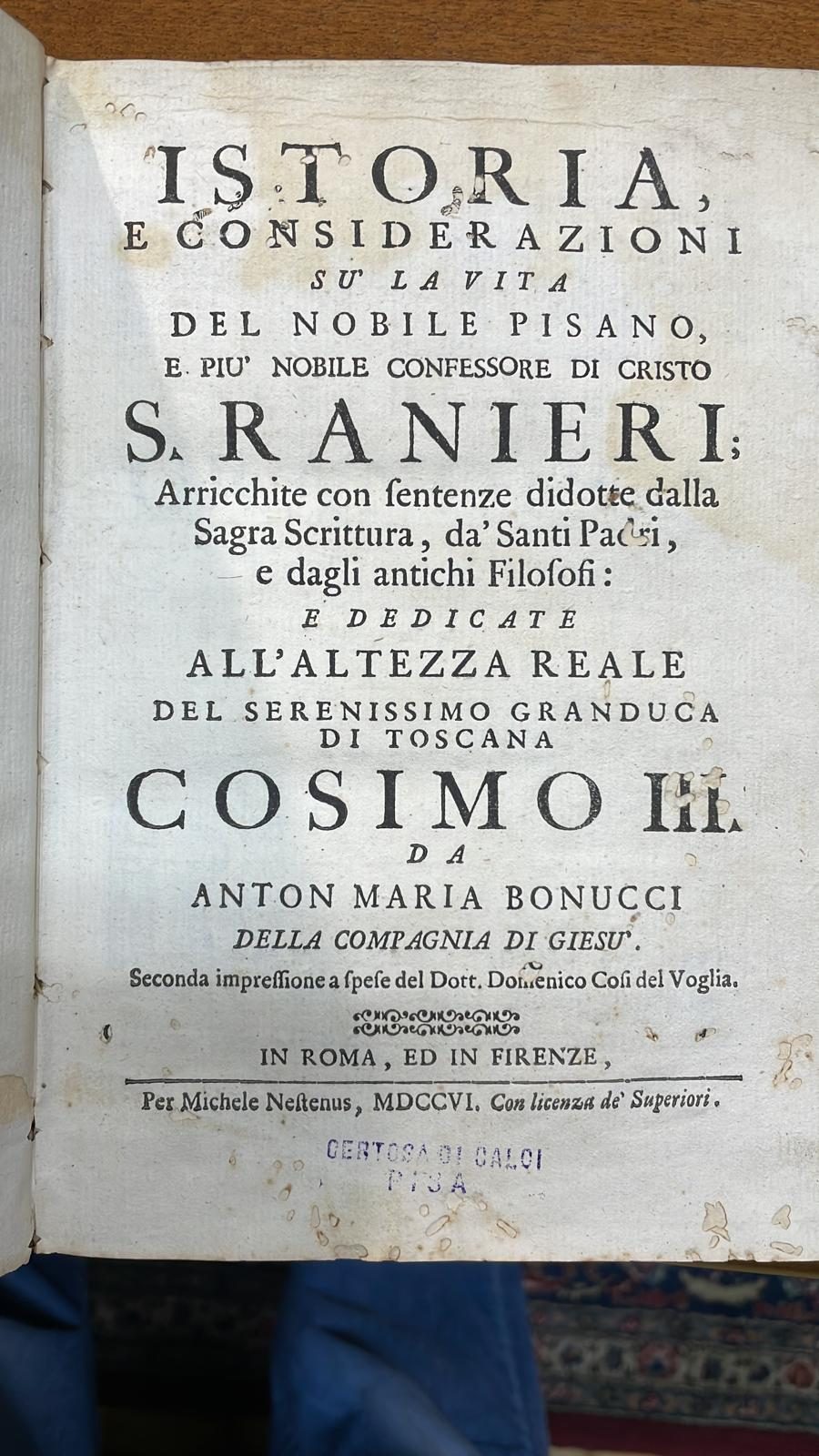
The life of Pisa's patron saint, "enriched with maxims drawn from Holy Scripture, the Church Fathers and the ancient philosophers", in an edition dedicated to the Grand Duke. One of many volumes in the collection on the city's saint.

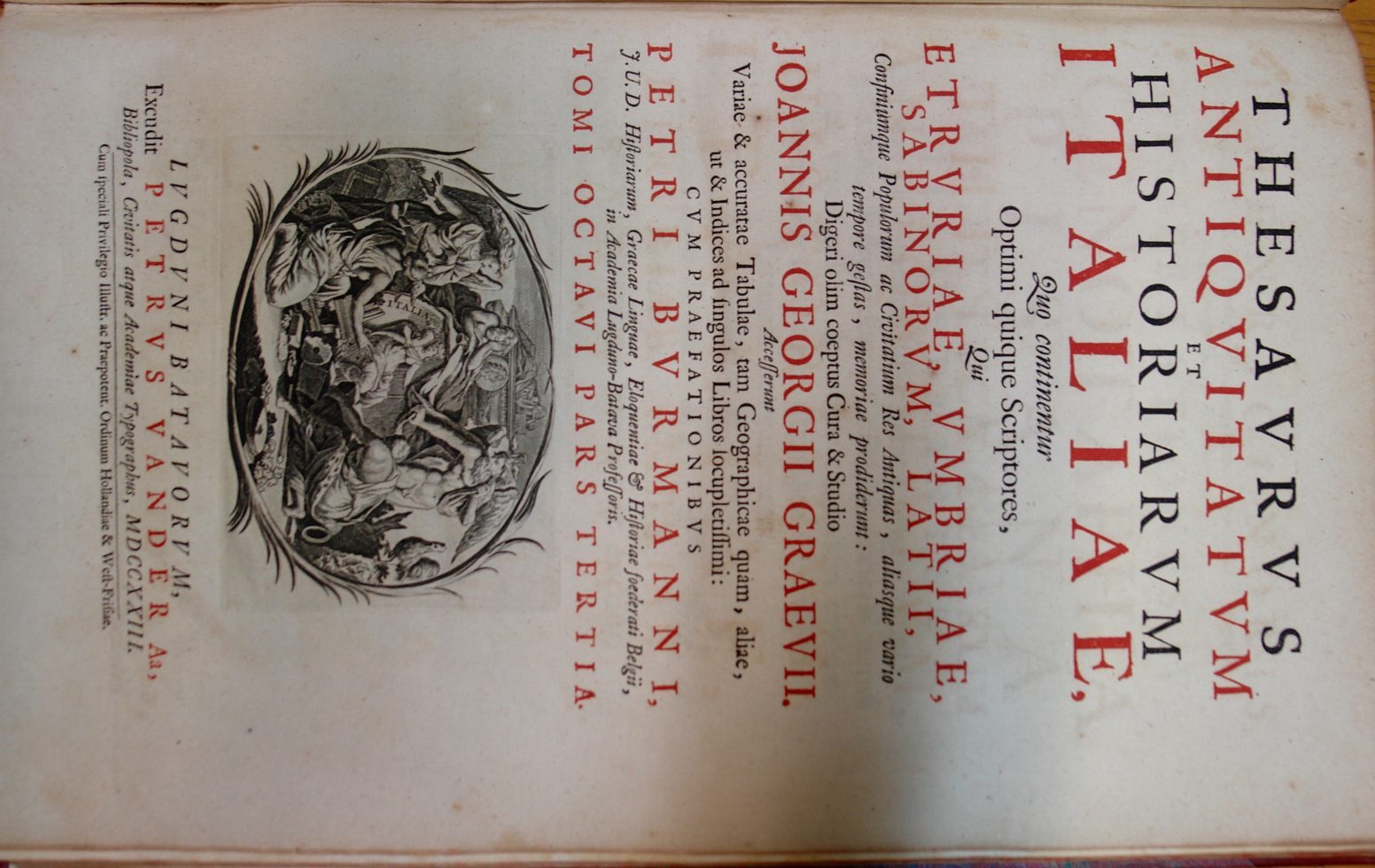
The great treasury of the antiquities and histories of Italy by the Dutch scholar Graevius, in Latin: the volume holds the part devoted to Pisa, with its allegorical engraved title.

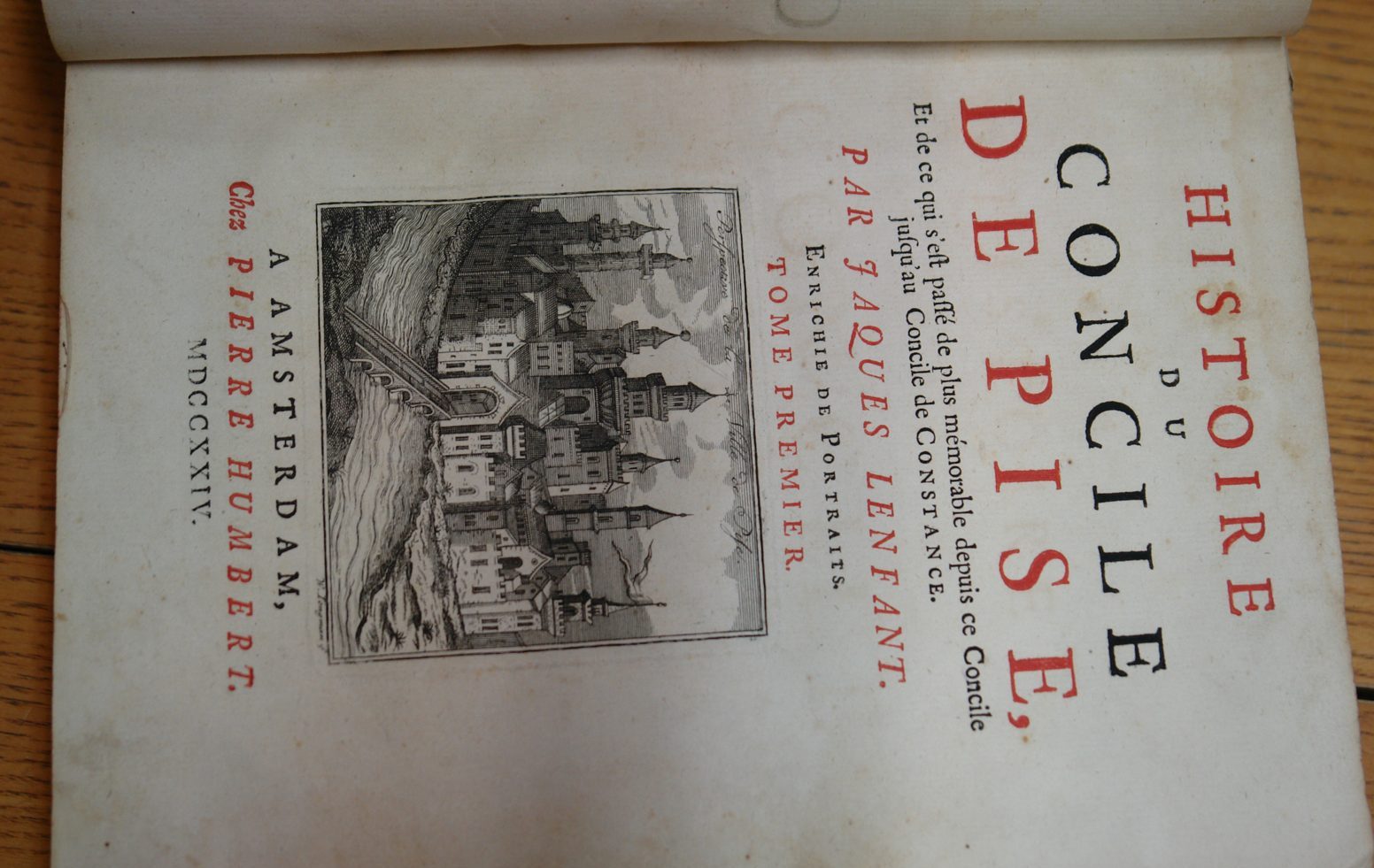
The history of the Council of Pisa of 1409, which tried to heal the Western Schism, in a fine Dutch edition in French with the author's portrait. A moment when Pisa stood at the centre of Europe.

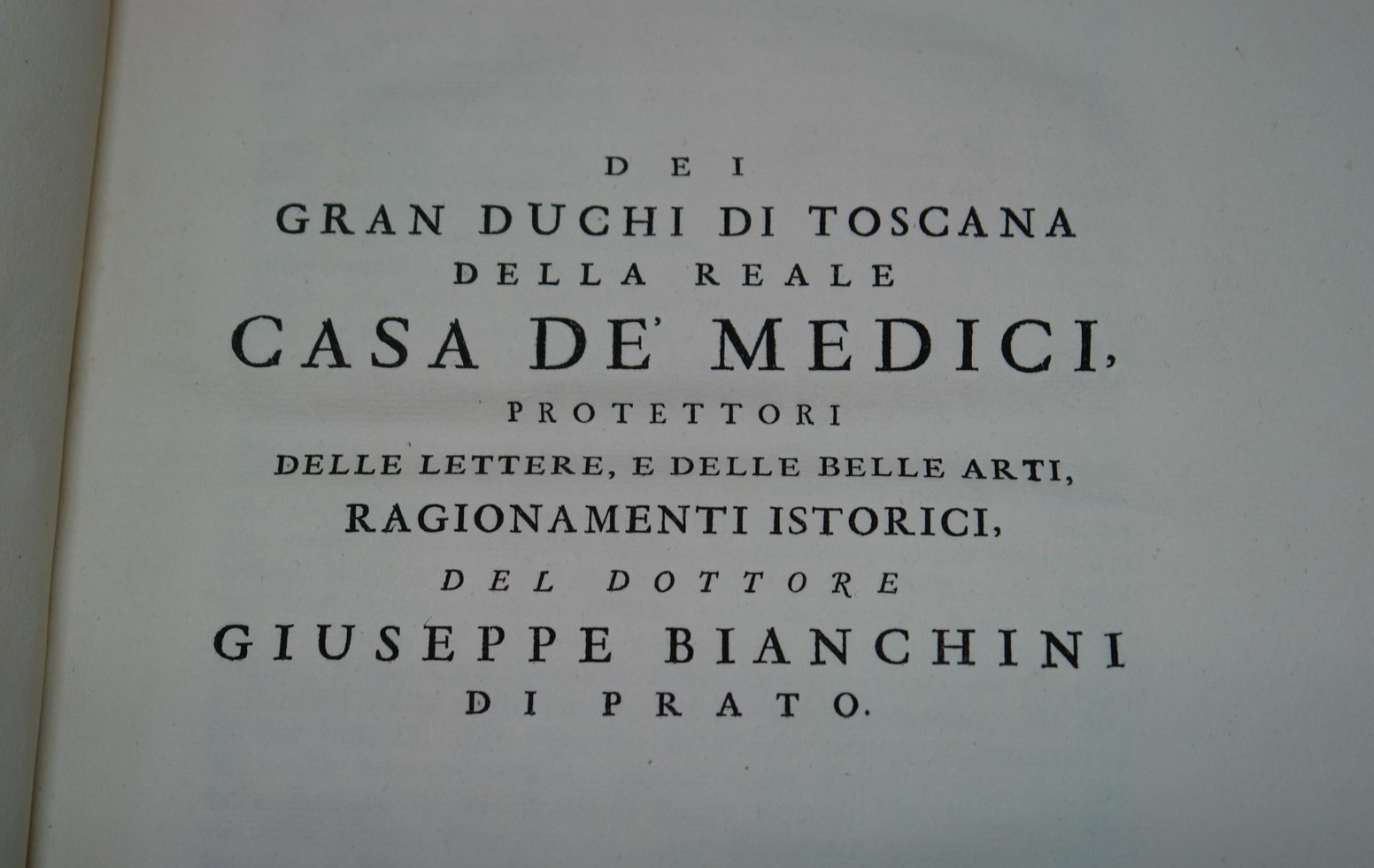
The "historical discourses" on the Medici Grand Dukes, patrons of letters and the arts, with portraits of the rulers in engraved frames. One of the finest volumes of Tuscan history in the collection.

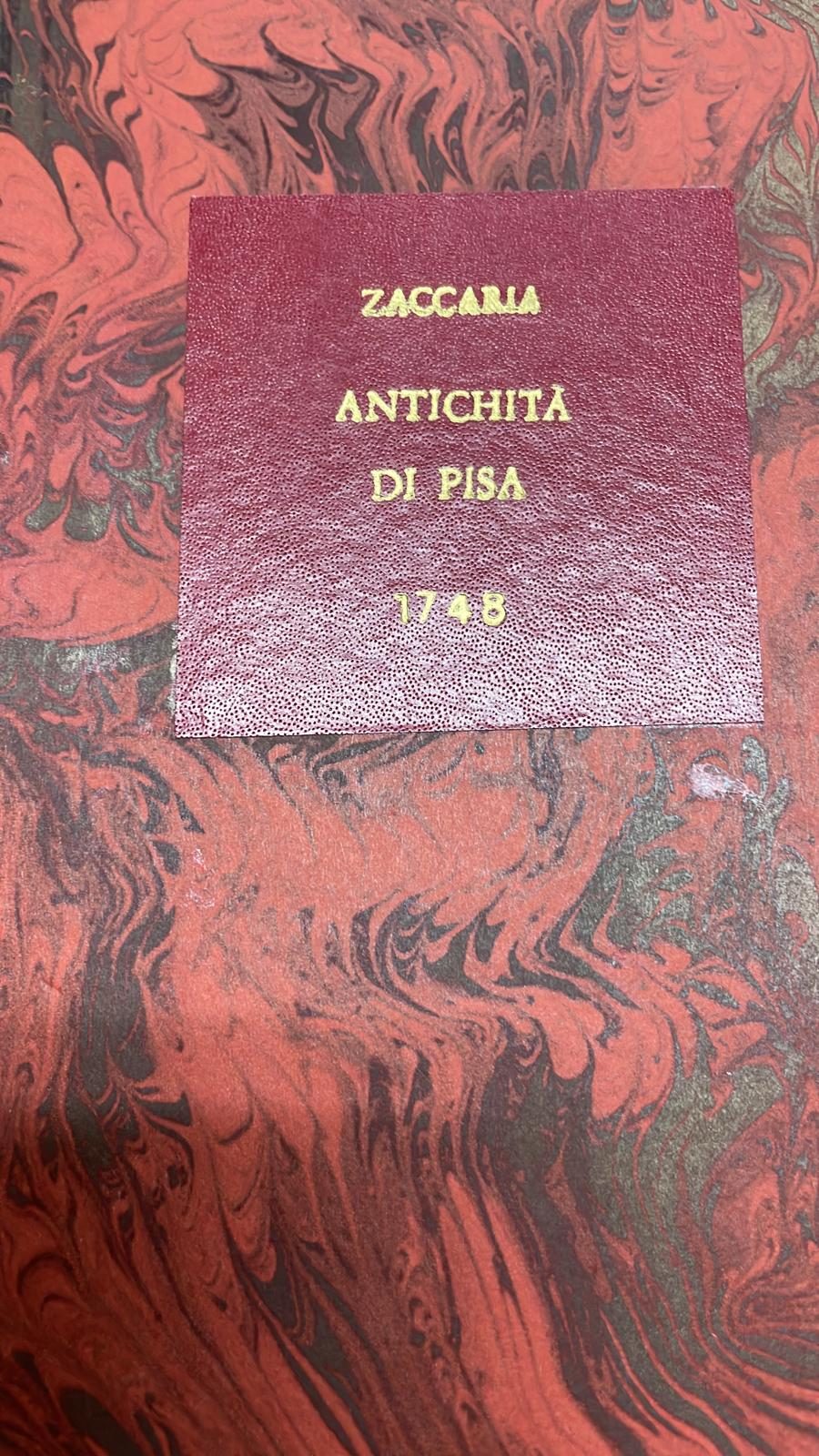
The Jesuit Zaccaria's letters to Onofrio del Mosca on the antiquities of Pisa, in a red leather binding with gilt tooling. Eighteenth-century scholarship on the city's monuments.

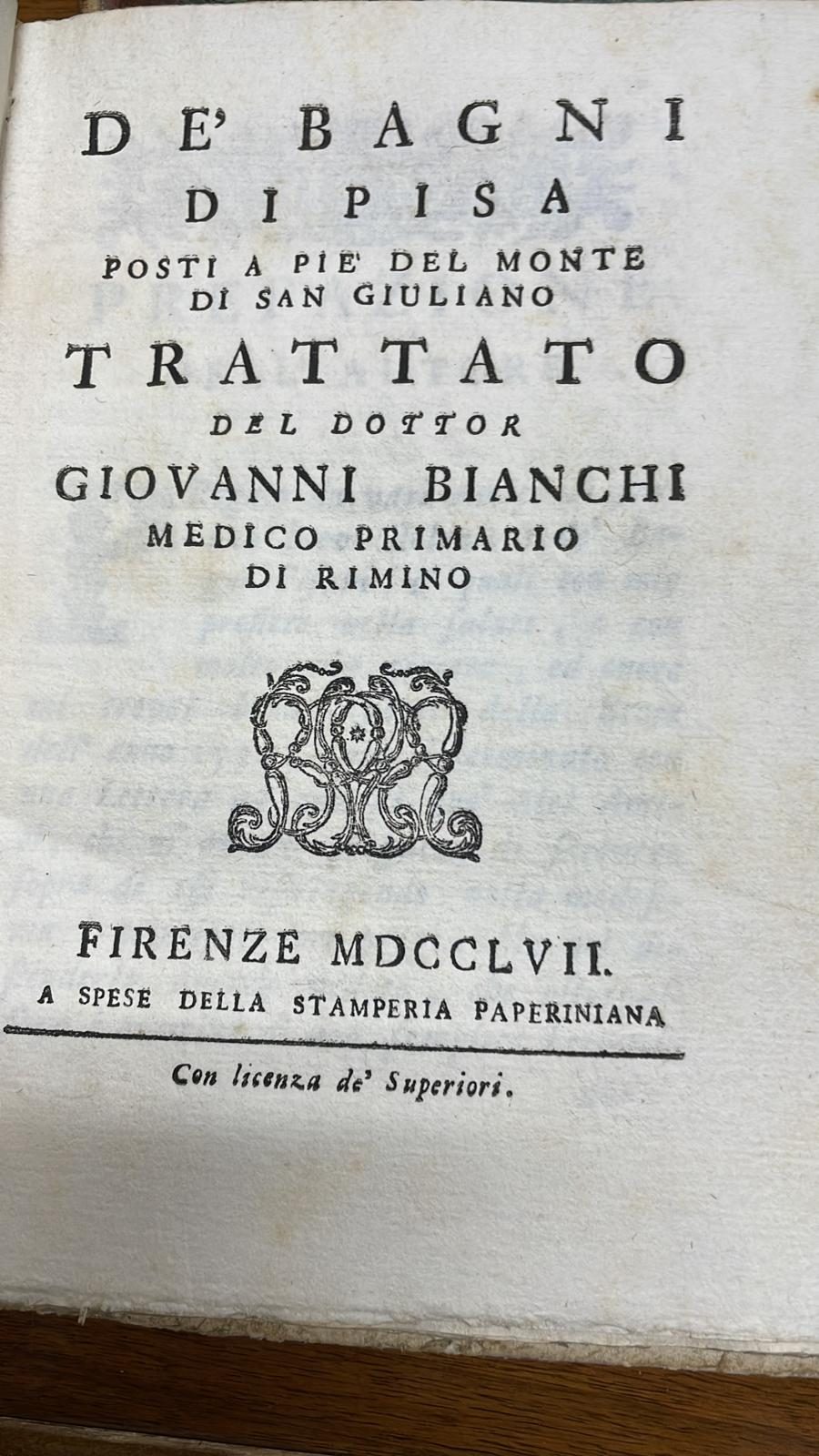
The treatise by the Rimini physician Giovanni Bianchi on the thermal waters of Pisa (San Giuliano). The collection also holds the twin work by Antonio Cocchi of 1750: the water cure was a Pisan glory.

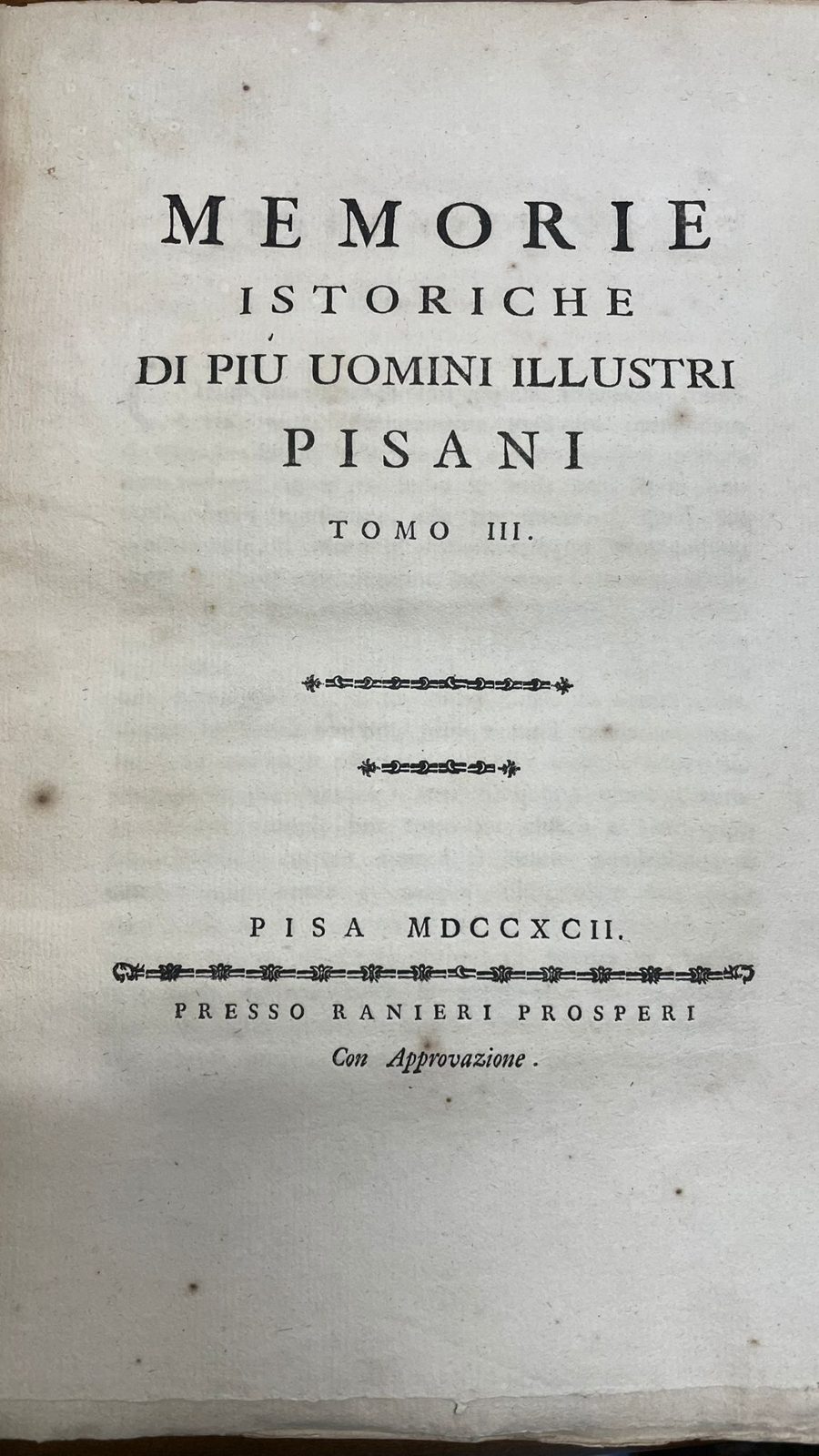
The lives of illustrious Pisans in four volumes printed by Ranieri Prosperi: the collection holds them all. A reference still consulted by historians of the city.

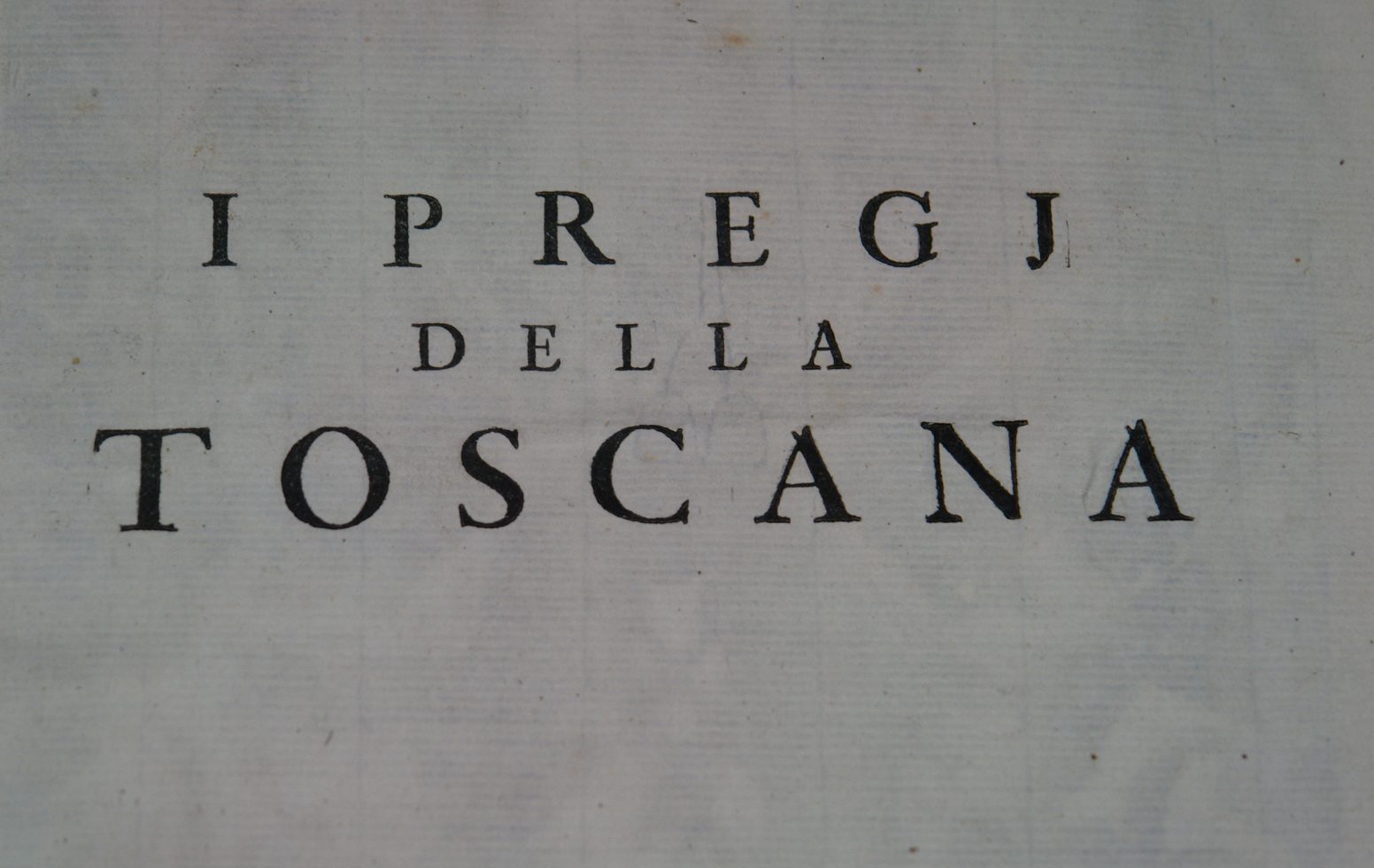
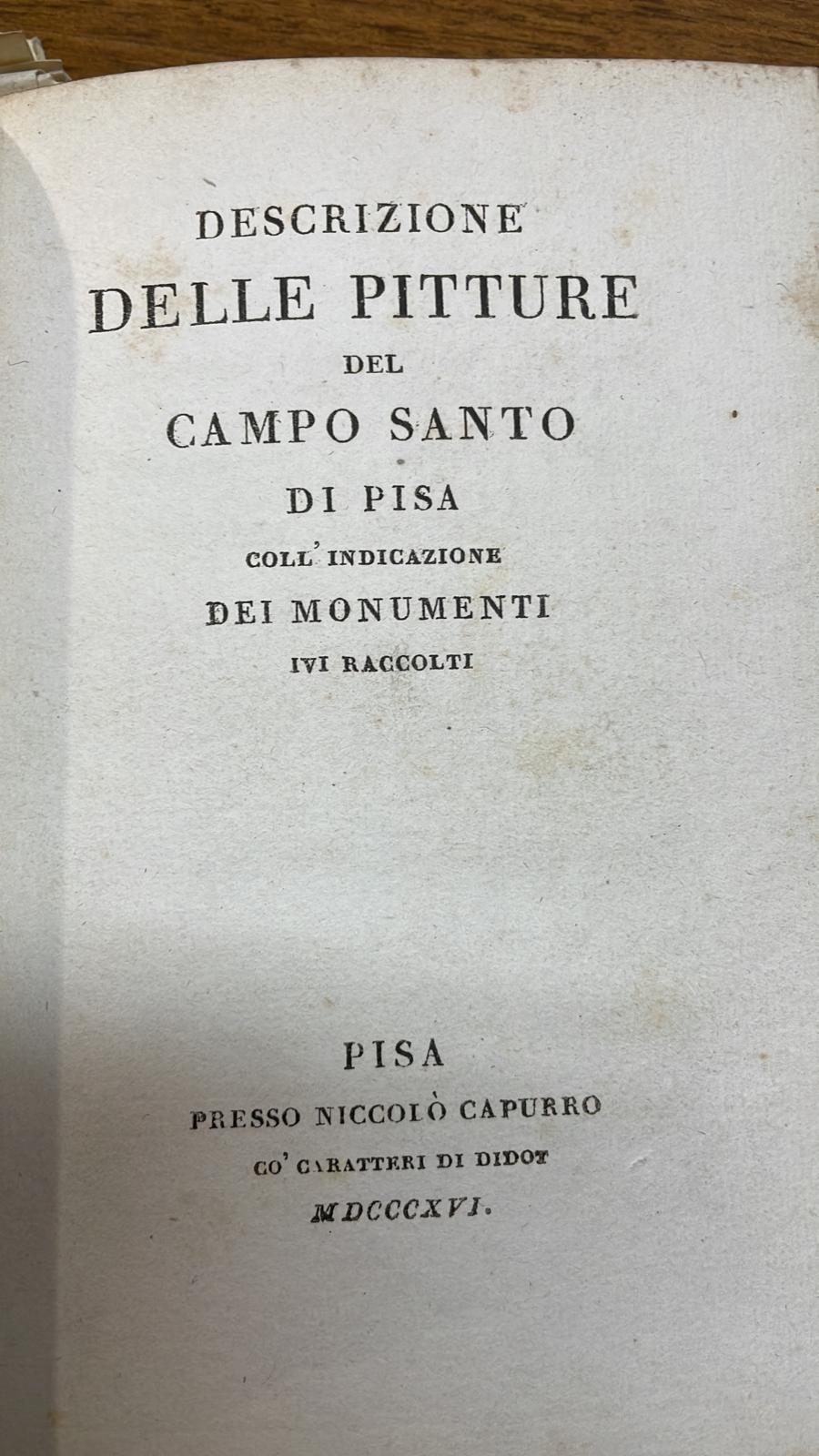
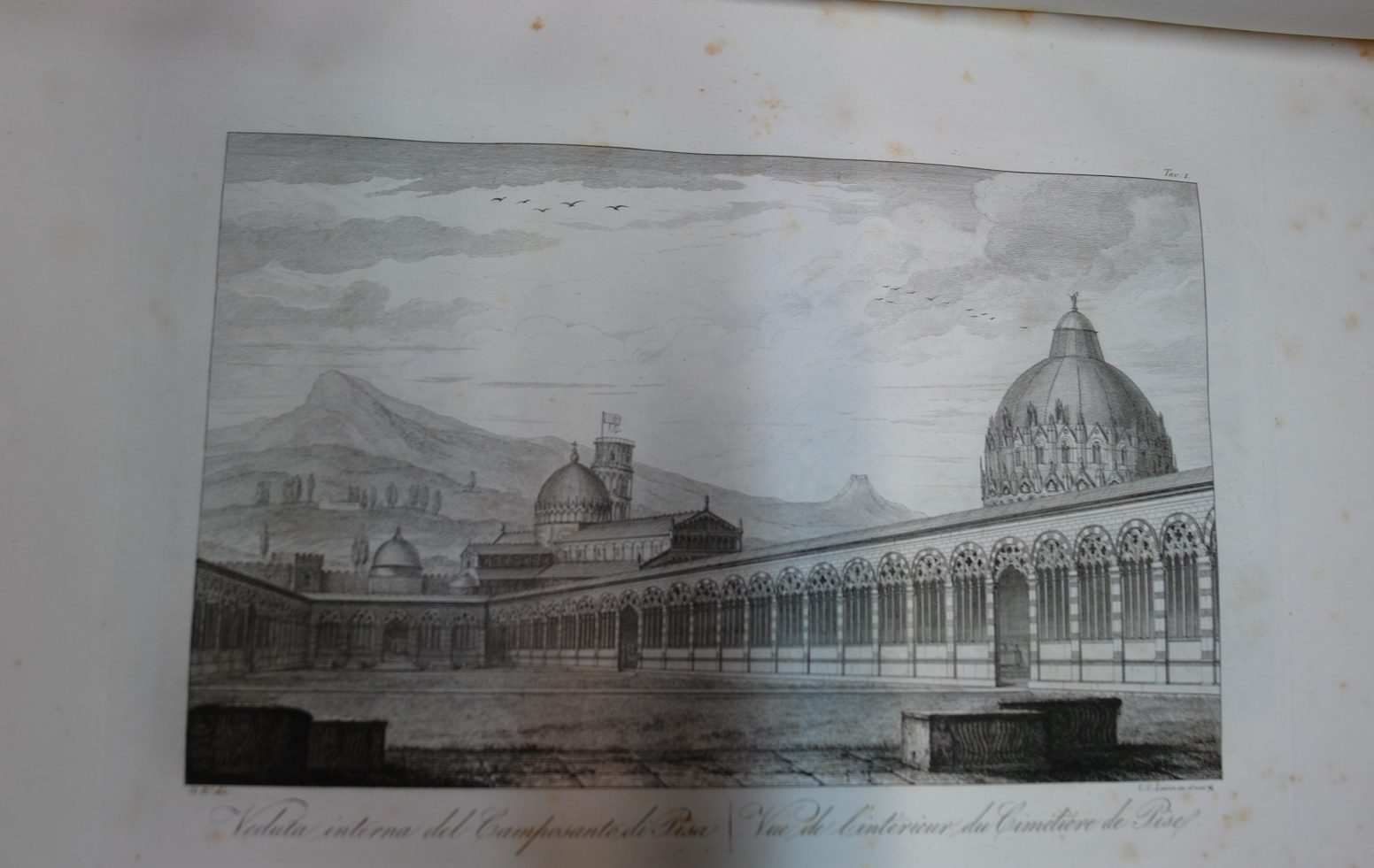
The guide to the frescoes and monuments of the monumental Camposanto, the painted cycle that for centuries made Pisa a stop on the Grand Tour. The collection also holds the engraved series by Lasinio (1812 and 1832).

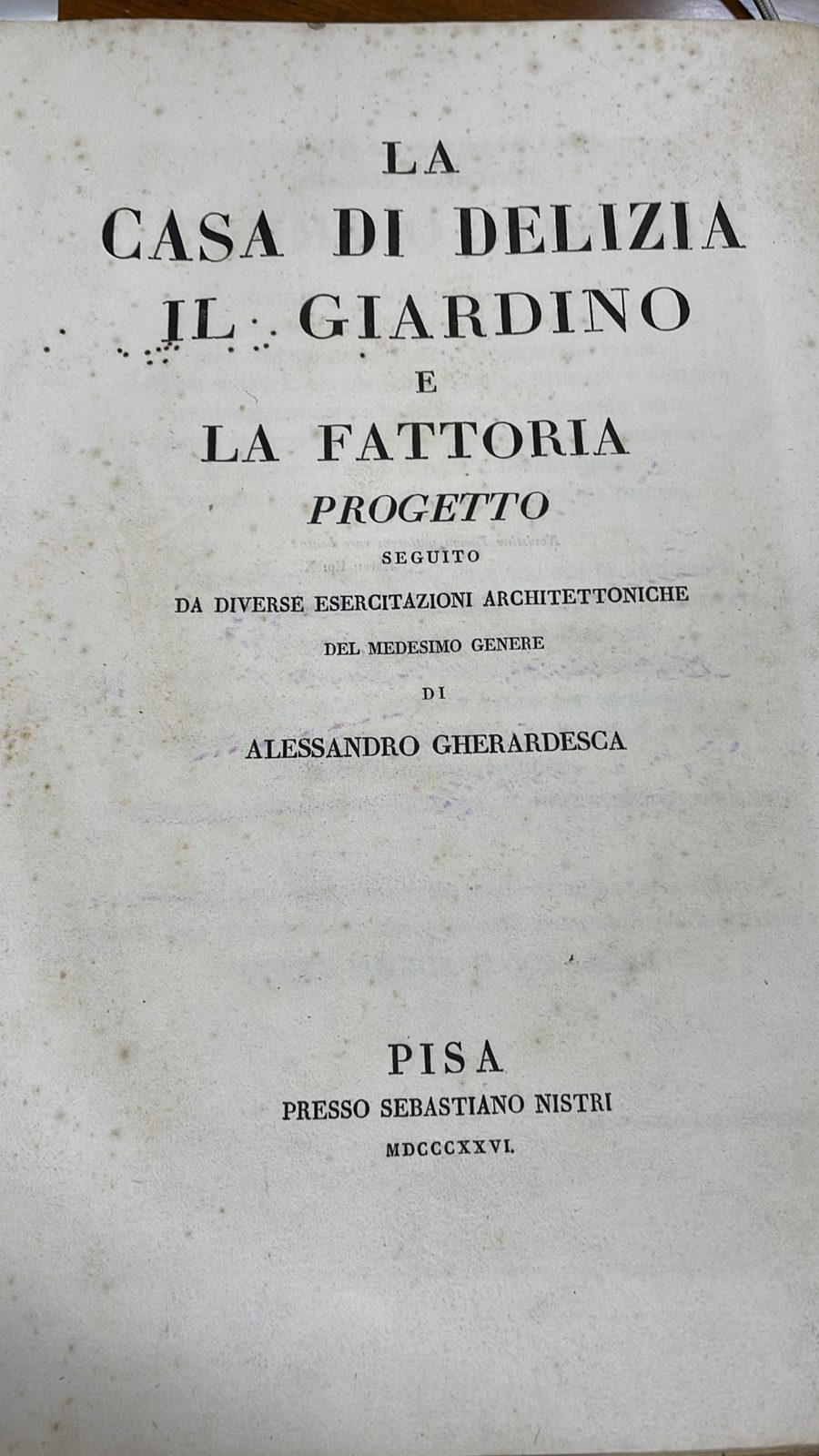
The design and architectural exercises of the Pisan architect Alessandro Gherardesca: villas, gardens and farms of the Grand Duchy in engraved plates. Both volumes are in the collection.

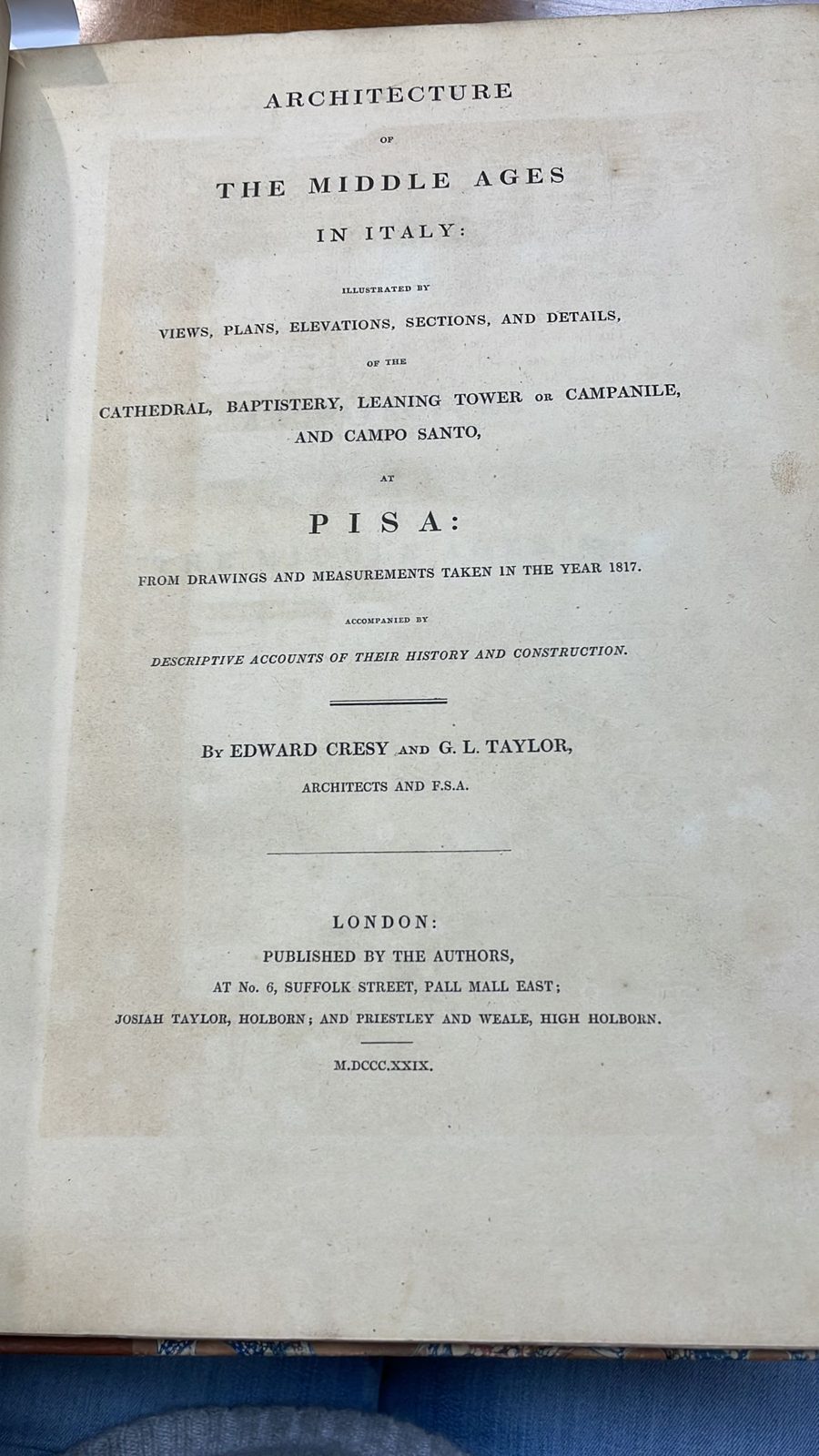
The surveys of the Piazza dei Miracoli made in 1817 by two English architects and published in London: plans, elevations and details of the Cathedral, the Baptistery, the Leaning Tower and the Camposanto.

The complete series of Lasinio's engravings after the Camposanto frescoes, drawn by Giuseppe Rossi: the large plates that fixed the image of the Camposanto before the damage of 1944.

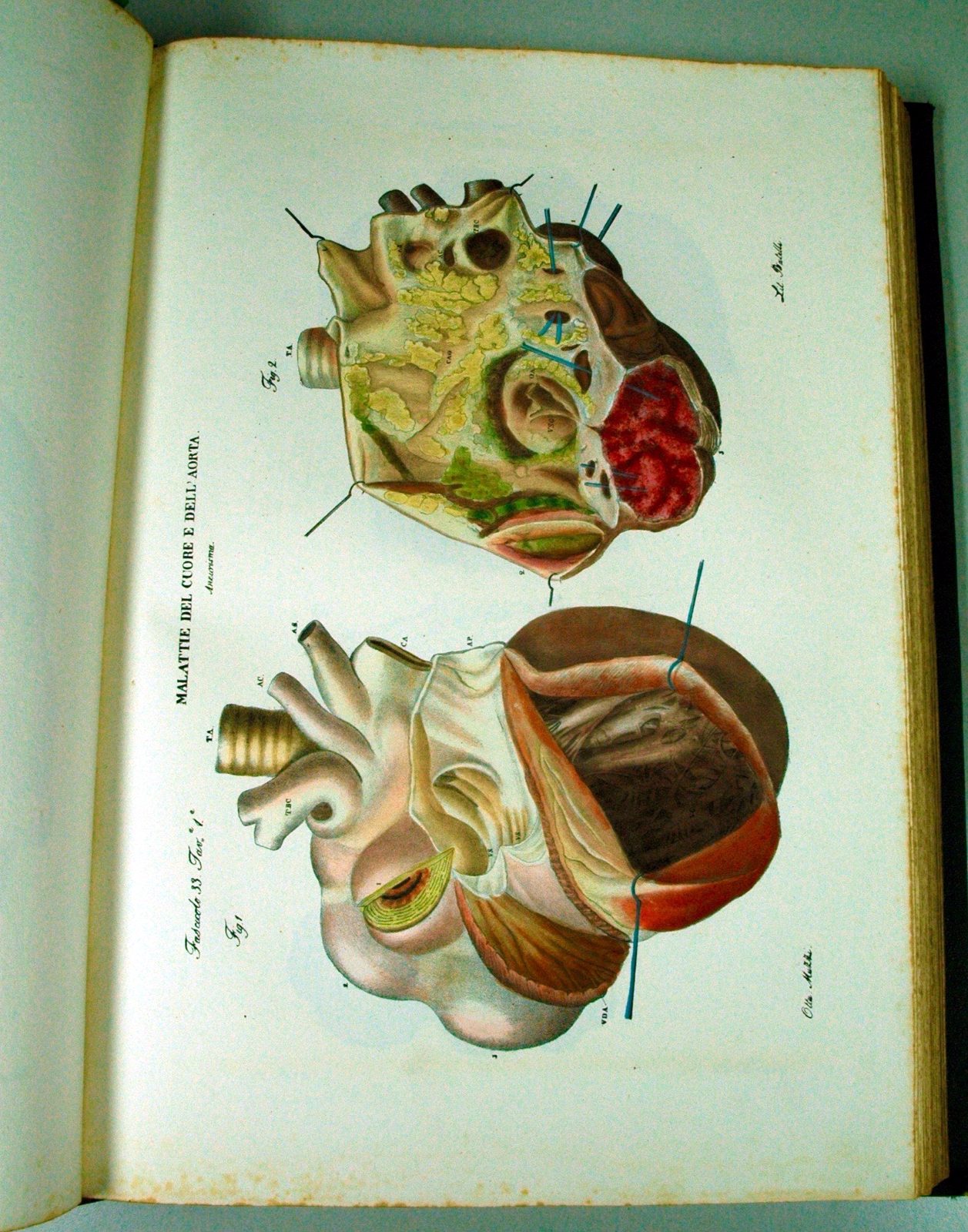
The Italian edition of the great atlas of pathological anatomy by the Frenchman Cruveilhier, with hand-coloured lithographic plates. Science and the art of engraving on the same page.

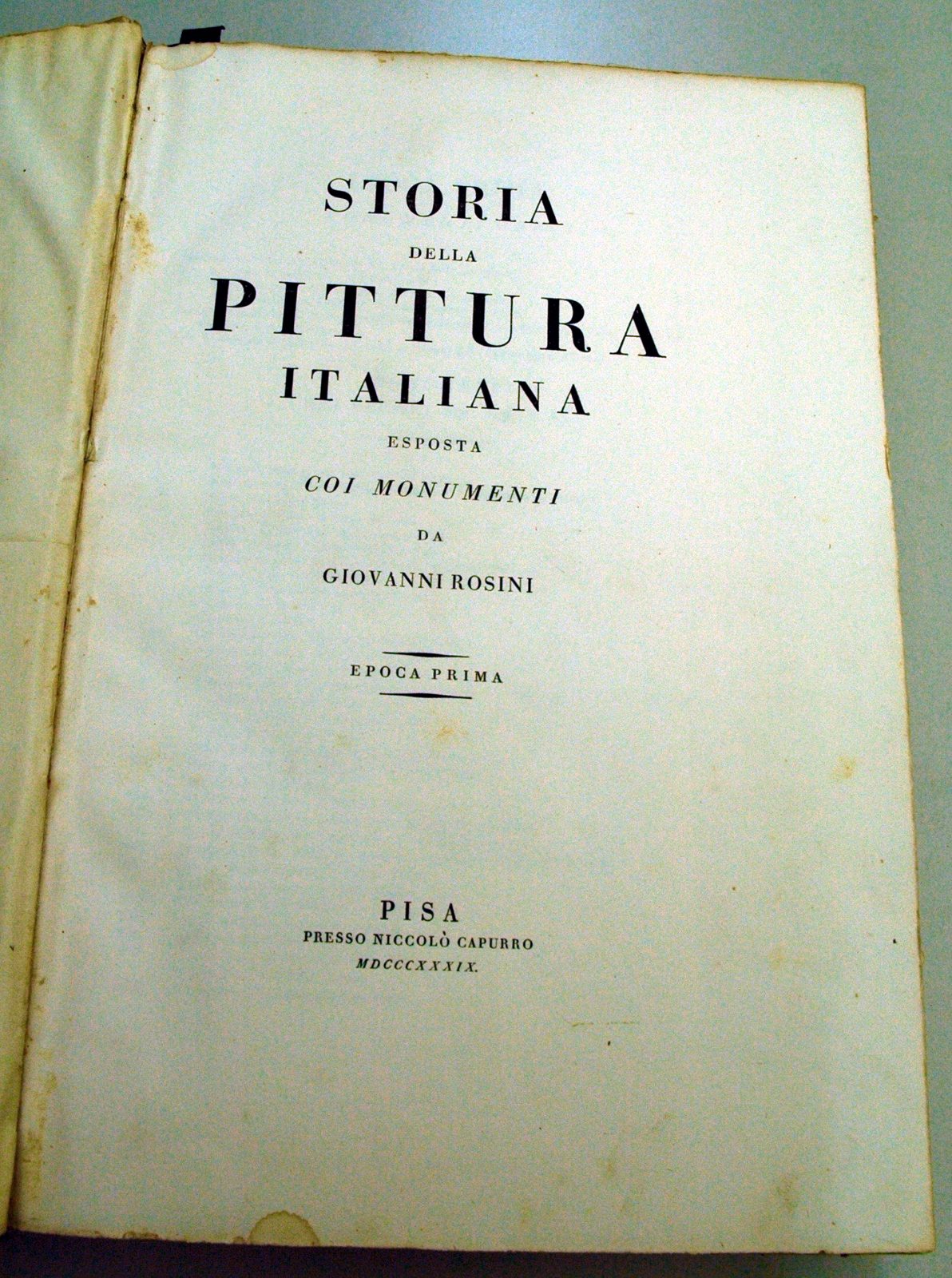
The history of Italian painting by the Pisan Giovanni Rosini, printed in Pisa by Capurro with plates of the monuments: a classic of nineteenth-century art historiography, held in the collection in several volumes.

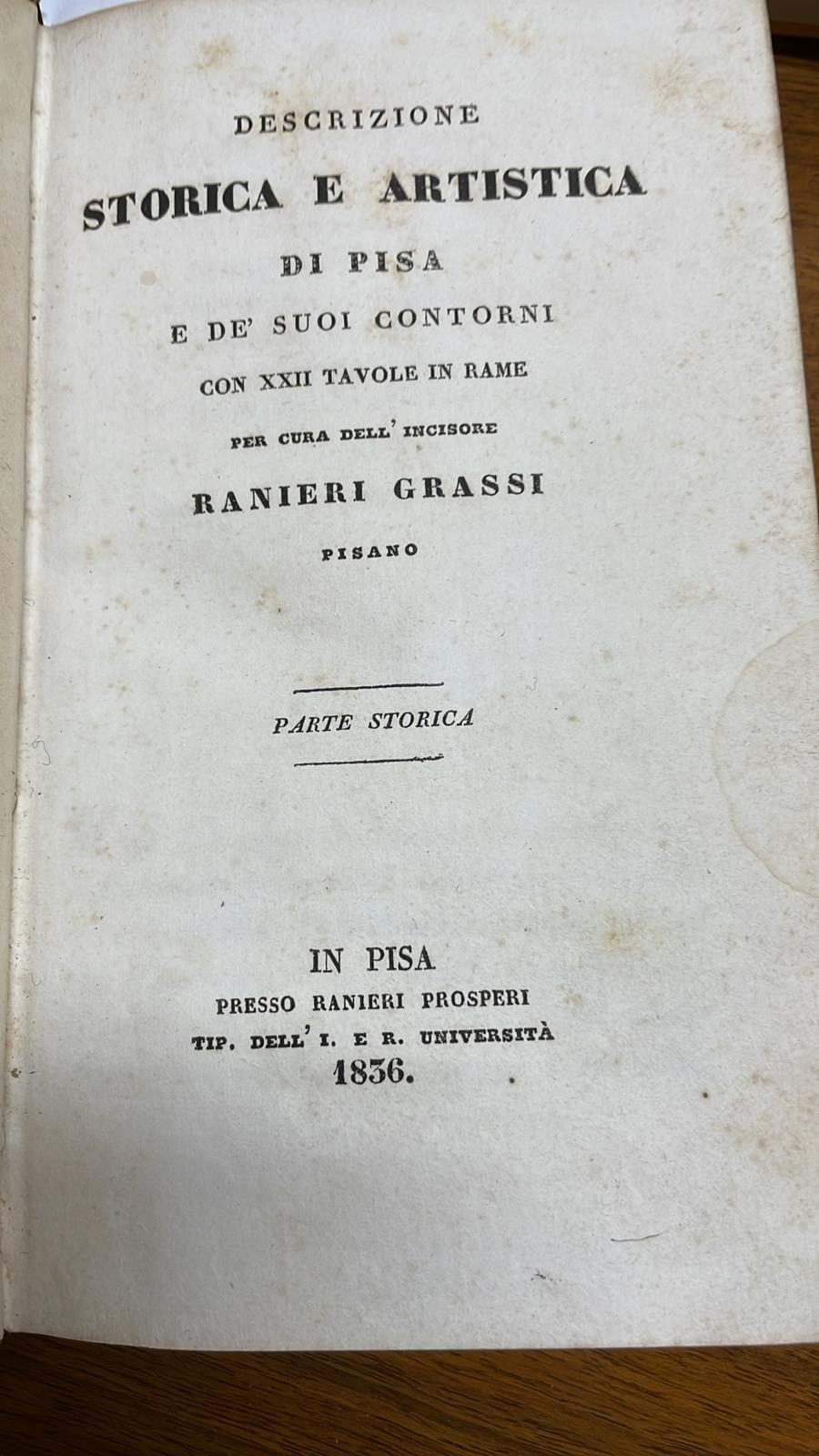
Ranieri Grassi's historical and artistic guide to Pisa, with twenty-two copper plates: the collection holds the editions of 1836, 1838 and 1856, together with the Nistri brothers' Nuova Guida di Pisa.
The entries follow the Farnesi Collection inventory and the photographs of the volumes; dates and attributions are those of the family inventory. The collection is not for sale: for study, loans or collaborations write to Zannini Studio Arte.